
Stop Rekeying the Same Data Into Three Systems
When your website, CRM and ERP do not talk to each other, someone on your team fills the gap with spreadsheets and copy-paste. We build the connections that take that job away, and we quote a fixed price before we start.
Get a free integration auditSee integrations we have built
Free. No pitch. A real person replies within one working day.






What We Integrate
If a system has an API we can connect it. If it does not, file exchange or a database-level connection usually gets us there. The valuable problems are rarely the ones an off-the-shelf plugin solves.
CRM Integration
A form submission becomes a CRM contact in seconds, with the source attached. No CSV exports, no manual imports.
- HubSpot, Salesforce, Pipedrive and Zoho
- Source, page URL and custom fields mapped
- Duplicate handling agreed before build
Marketing Automation
Website behaviour fires the right sequence at the right time, rather than a weekly list upload.
- Marketo, Klaviyo and Mailchimp
- Purchases, form fills and page visits as triggers
- Consent and suppression respected across systems
Payment Gateways
Checkout and billing flows built past what the standard plugins will do.
- Stripe, PayPal and Worldpay
- Recurring billing and multi-currency
- Reconciliation automated into your accounts package
Custom Internal Tools
The in-house system nobody else will touch is usually where the biggest saving sits.
- Any tool with an API or a reachable database
- Middleware layer built where no API exists
- Documented well enough for your own developer
On-Premise Systems
Legacy infrastructure behind your firewall is not a dead end.
- Secure tunnel or VPN to your network
- No data leaves your environment
- Works with systems that predate the web team
Why We Build on n8n
n8n is an open-source workflow tool that sits between your systems, translating data formats, managing API calls and catching errors. It is not the only way to do this, but for most of the work we deliver it is the right trade-off.
- Cheaper to run than Zapier at volume. It runs on your own infrastructure, so there is no per-task pricing that climbs as usage grows, and no business data leaving your environment.
- Easier to maintain than custom scripts. Workflows are visual and auditable. When something breaks you can see which step failed and why, without reading anyone else’s code.
- Changeable without a developer. Where we can, we build in configuration options so your team can adjust behaviour themselves rather than raising a ticket for every tweak.
What Happens, and When
Nothing gets built before you have approved the design. Every stage ends with something you can read.
Week 1: Technical discovery
We map the data that has to move between systems, find the edge cases, and agree what happens when two systems hold different versions of the same record. You get a fixed-price quote at the end of this, not a day rate and a shrug.
Week 1 to 2: Integration design
The data flow, the transformation rules and the error handling are written down before any code exists. You review and approve that document, so nothing during the build is a surprise.
Week 2 onwards: Build with monitoring
Monitoring goes in from the first day of the build, not bolted on later. Failed API calls raise alerts, validation catches malformed records before they spread, and retry logic absorbs the temporary outages every API has.
Before go-live: Testing and handover
Tested against realistic data volumes and the edge cases we found in discovery. You receive documentation written clearly enough for a developer who has never met us to maintain and extend it.
Ongoing: Maintenance
Covered by our support packages. We watch for breaking API changes, handle version updates, and extend the workflows as what you need changes.
Systems We Have Connected
The first saving is time: nobody exporting a spreadsheet to import it somewhere else. The second is data quality, because an automated rule applies itself the same way every time. Three examples below.
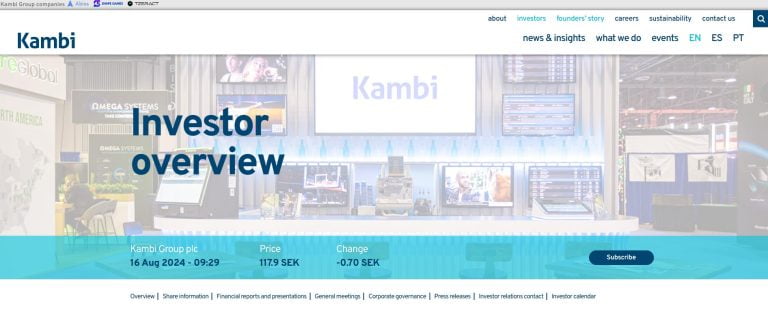 Kambi
Gambling
Total Cost of Ownership, Widget Customisation and Speed, Monitoring Efficiency, Automated Pr… Seamless Integration of IR Systems for Enhanced Efficiency and Automation
Read the case study
Kambi
Gambling
Total Cost of Ownership, Widget Customisation and Speed, Monitoring Efficiency, Automated Pr… Seamless Integration of IR Systems for Enhanced Efficiency and Automation
Read the case study
 Fragrance Samples UK
AI
Daily processing time reduced from 1.5-2.5 hours to 5-10 minutes (85-95% time saving). From Hours to Minutes: Bespoke Automation Cutting Daily Order Processing
Read the case study
Fragrance Samples UK
AI
Daily processing time reduced from 1.5-2.5 hours to 5-10 minutes (85-95% time saving). From Hours to Minutes: Bespoke Automation Cutting Daily Order Processing
Read the case study
 Dufour Building Services
Property & Construction
Live on the client’s own domain 24 days after the first line of code. Builders AI Prototype Becomes a Working CRM
Read the case study
Dufour Building Services
Property & Construction
Live on the client’s own domain 24 days after the first line of code. Builders AI Prototype Becomes a Working CRM
Read the case study
Frequently Asked Questions
What do I own at the end of the project?
How much does it cost, and how long does it take?
What if the system we use does not have a good API?
We have connected to systems with poor or undocumented APIs before. Options include file-based exchange, database-level integration, or building a middleware layer. It is rarely a dead end.
Will the integration break when systems update?
Can you integrate with a system hosted on-premise?
Do you work with custom-built internal tools?
Rather just talk it through? Call +44 (0) 20 8068 0360 and ask for the integrations team.
Find Out What Can Be Automated First
Tell us which systems you run and where the copy-paste happens. Here is what comes back.
- A shortlist of the workflows worth automating first, ranked by hours saved
- Whether each system has an API we can use, or needs a workaround
- The approach we would take: n8n, middleware, or a direct API build
- An indicative timeline and a fixed-price range before you commit to anything
Free. No pitch. A real person replies within one working day.
Get a Free Integration Audit
Tell us which systems you run and what your team is rekeying by hand. We will look before we reply.